Kotor or Budva: Where to Base Yourself for a Week
The two bases people send me when they book a month on the Montenegrin coast are Kotor and Budva, twenty-two kilometres apart, and the choice gets argued on scenery when it should be argued on walking. I lived out of Kotor for four weeks and spent six separate days in Budva with a notebook, and the differences are practical rather than poetic. The note I kept was simple: how far to milk, how far to a swim, how loud at midnight, and what the month costs once the small bills are added.
Both towns sit on the same bay, share the same buses and price their food within a few percent of each other, so the argument that matters is the one about the walk between the flat and the rest of your life. I have made that walk at nine in the evening with shopping in both hands, in both places.
| Line | Kotor | Budva |
|---|---|---|
| One bedroom, monthly | 600 to 750 euros | 550 to 700 euros |
| Walk to a full size supermarket | 12 minutes from the old town | 6 minutes |
| Steps to a swim | None, but the beach is small | Flat, 1.5 kilometres of it |
| Night noise in August | Low after midnight | High until three |
Rent and the deposit
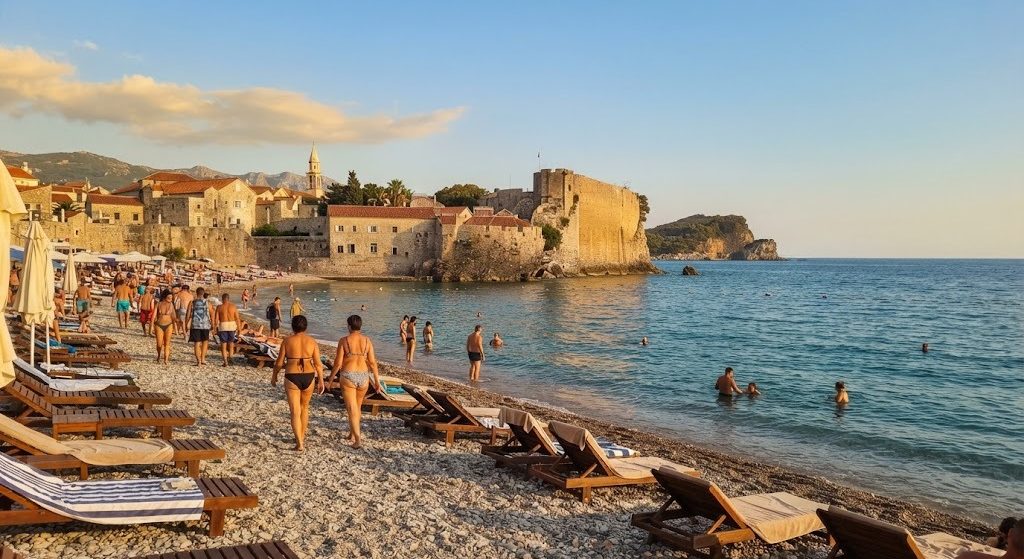
Both towns price a one bedroom within a hundred euros of each other for a month in summer, and the deposit is usually a month of rent with the meter photographed on arrival. Kotor supply is older and smaller: the old town apartments are stone, thin walled and often one flight up a street that no vehicle can enter.
Budva stock is newer, bigger and more likely to have a lift and a parking space, and what you pay for that is the walk rather than the rent. In both towns the summer listing is photographed in May, so I ask for a picture of the street door and the bedroom window, and I never pay a deposit before seeing the stairwell.
Utilities run about 60 euros a month in a small apartment in either town, higher in Kotor where the air conditioning does most of the work from June onward. Internet was fast enough for video calls in both flats, which was the one thing I checked before signing anything.
The walking, which is the real difference
Kotor old town is flat and closed to cars, so daily life happens in about six hundred metres of stone. The catch is everything outside it: the bus station and the main supermarket sit 900 metres along a road with a narrow pavement, and pushing a stroller that stretch twice a day is what wears people down.
Budva is built for errands. The main street runs flat from the old town to the shopping centre in ten minutes, and the beach is a further five. I covered the same weekly shopping in half the walking. The other difference is the pavement: Kotor old town has none, it has stone that turns slippery in rain and punishes small wheels, while Budva has kerbs and dropped crossings all the way to the market.
August: crowds on both sides
Budva in August is loud: the beach fills by ten, the old town hosts concerts on several nights a week and the traffic along the Riviera stands still from four in the afternoon. It is the right answer for a group that wants a restaurant without booking and a bus to any other town every twenty minutes.
Kotor absorbs its August differently. The cruise tenders land in the morning and clear by four, the walls stay hot until evening and the streets are quiet by eleven. The trade is that after nine there are two places open and neither has a menu in English. Garbage collection and the summer festival schedule are the two things I would check before signing, because both arrive early in the morning under the window.
The swimming argument differs too. Kotor has small pebble pockets that empty at low tide and a public bus to a longer beach twenty minutes away, while Budva gives you a continuous stretch of sand with entry ladders every few hundred metres.
Who each town fits
The decision comes down to what the week is for, and after a month of both I sort people into two groups that rarely swap. The list below is what I send before anyone pays a deposit.
- Kotor suits a working month: quiet nights, a walkable errand loop and the bay for a Sunday.
- Budva suits a beach month: shallow water, long sand and the option to eat out late without planning.
- Kotor suits anyone with a buggy, as long as the flat sits near the north gate.
- Budva suits a group of friends, and suits nobody who needs sleep before seven.
Verdict, with the exception
I take Kotor for a month of work and a bay to explore, and I accept the supermarket walk as the price of the quiet. Choose Budva if the trip is a beach holiday with a car, if the group wants nights out, or if you are travelling with teenagers who will make their own way home.
The single test that settles it: count how far you are willing to walk for milk at nine in the evening. Under five hundred metres and the flat is in Budva, and if the walk does not bother you, the walls and the water in Kotor are worth the extra ten minutes.