First Week in Kotor: Arrival, Paperwork, Settling In
Seven hours of time difference and a toddler will teach you more about a place than a guidebook. We landed in Kotor for a month-long stay with two children, and the first week was a mix of exhaustion, small paperwork chores and one very fast feeling of belonging.
This is what the arrival actually looked like, including the rules we got wrong before we got them right.
The landing
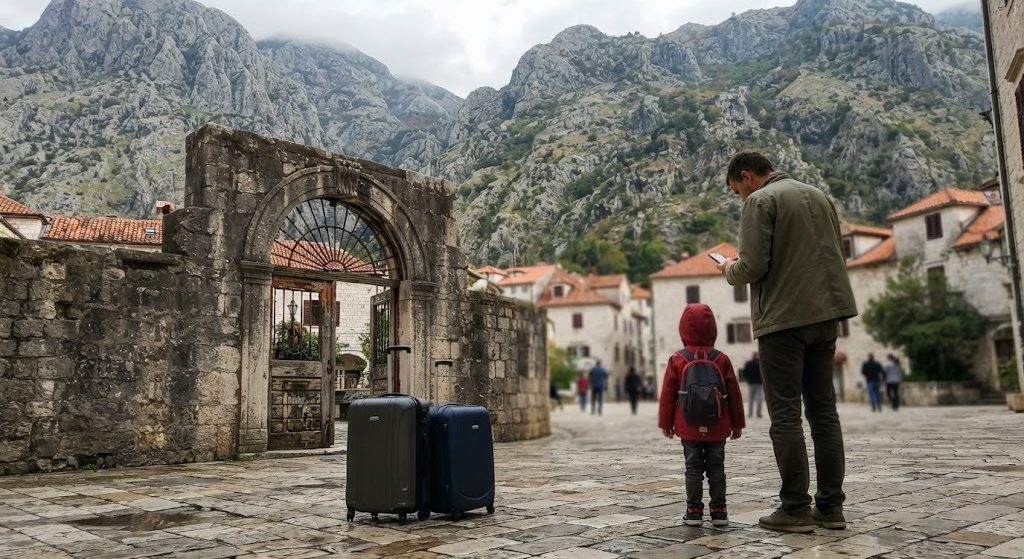
Tivat airport is small and the exit took under ten minutes. A driver was waiting outside with our name on a card, loaded the bags and drove us straight to the apartment. Our host met us at the door, carried everything in and walked us through the rooms. On the table sat a basket of local olives, jars of jam, fresh fruit, a framed photo and a letter.
That first evening we did nothing except eat fruit and fall asleep. Jet lag with a four hour shift is manageable; with seven hours it is not, and we stopped trying to fight it by day three.
Two rules from the host
The first piece of advice was about money: never use an ATM that is not physically attached to a bank. Standalone machines charge high fees and hide a poor exchange rate in the spread. There is a bank next to the tourist office, which solves two errands at once.
The second rule was the tourist tax. Montenegrin law asks every visitor to register within twelve hours of arrival and pay a small daily charge, in cash, at the tourist office in the old town. The rates are simple:
- Adults: one euro per day.
- Ages 12 to 18: fifty cents per day.
- Under 12: free.
Bring your passport and the name of your landlord. Hotel and short-let hosts usually handle it for you; in a self-catering apartment you do it yourself, and the landlord's name is given to you on arrival. The office asks for arrival and departure dates and calculates the total. Our twenty-four night stay came to forty-eight euros, paid in one go.
The office we used was the main information point on the Square of the Arms, open daily from eight in the morning until nine at night, about a six minute walk from the coworking area. We wandered around for two days looking for it before asking someone, which is the reason this paragraph exists.
Food for the first days
We ordered groceries before we landed so the kitchen had familiar food waiting. With children, this removes the worst part of day one. Two local habits cost us a shopping trip: most grocery shops close on Sundays, and Saturday queues are long. We now buy for the week on Wednesday or Thursday.
Labels are mostly in another language, so a translation app earns its place on the phone. Many locals speak a few words of English, and a handful of Montenegrin phrases makes daily life noticeably easier. Our cohort turned it into a competition by the second week.
Drinking water and other surprises
Tap water was flagged as unsafe to drink twice during our month, with an alert in the community channel each time. We keep bottles filled and check the message every morning. Ice is not a standard thing here either, dryers are rare, and clothes dry on a rack in small loads. None of it is difficult, but it does slow the household down.
The apartment and the view
Our place sat a short walk from the school and the coworking hub, around a small shopping centre with a grocery shop, a pharmacy, cafés and a play area that stays open until eleven at night. The balcony looked right at the mountains on one side and the bay on the other, with ships sliding in and out after dark.
School, work and the first friendships
The programme runs through a set of group channels, one per topic, which felt excessive for three days and then felt obvious. Our daughter came back from her first field trip talking about a cathedral, clay art and new classmates. Our son talked about playdough and singing.
Adults get daytime activities while the children are in class, from hiking to kayaking to yoga. Parents organise playdates in the gaps. The part we did not expect was how quickly the children made friends, and how much that changed the mood of the whole apartment.
What the fee covers, and what it does not
The programme fee covers tuition, lunch and two snacks for the children, field trips, the rent, weekly cleaning, coworking access and many community events. On top of that we paid for pre-arrival groceries, the tourist tax, eSIM cards, weekly shopping, the odd lunch out, taxis and coffee.
By the end of week one we had a routine, a working supermarket list and a tax receipt. What we still did not have was a reason to leave, which is a strange thing to say about a place you arrived in exhausted.
Moving around the bay
The old town is small enough to cross on foot in ten minutes, and steep enough that the first walk up feels longer than it should. We learned to schedule the big climb for the morning and keep the evenings flat, along the waterfront where the breeze reaches you.
Buses run along the bay but they are infrequent once you leave the main road, so for anything involving children we used taxis. Fares were agreed before loading, never metered, and short hops across town cost less than a coffee each. For a day trip into the mountains, we booked a driver through the community board instead of assembling a route ourselves, and the mountain curves earned their reputation: our bus stopped six times on the way to the north, which is why motion sickness tablets now live in the day bag.
The errands that caught us out
- Shops close on Sundays and queue longest on Saturday afternoons.
- Card payments work almost everywhere, but the tourist tax office takes cash only.
- A pharmacy sits inside the shopping centre near the apartments, open late.
- Laundry racks are small, so wash small and often rather than saving it all for one load.
None of these are problems. They are simply the four things we would have written down for ourselves a week earlier if someone had told us.
Work, and the quiet hours
The coworking space runs around the clock for residents, with desks, monitors, enclosed pods for calls, a small kitchen and a lounge. The pods matter more than they sound: with two children in a two bedroom apartment, a door that closes is the difference between a call that happens and a call that does not.
We settled into a pattern of mornings at home, one block of work after the children left for class, and the second block after they were in bed. Everyone in the cohort found their own split within a few days, and nobody scheduled meetings across lunch.
What we would tell the next family
Register the tax within the first day, buy groceries before the first Sunday, ask for the landlord's name in writing when you collect the keys, and keep bottles of water topped up. Ask which floor the apartment is on before you arrive if stairs matter, and confirm whether the building has a lift.
After that, the first week stops being a list of chores and starts being the week you remember. Ours ended with a balcony door open, mountains on one side, ships on the other, and two children asleep before the street lights came on.