A Month of School in Kotor: The Practical Detail
Handing children over to a school in a country you arrived in five days earlier is the hardest part of a long stay abroad. Here is how the centre in Kotor actually runs, from the drop-off window to the weekly field trip, and what we would pack differently next time.
The shape of the day
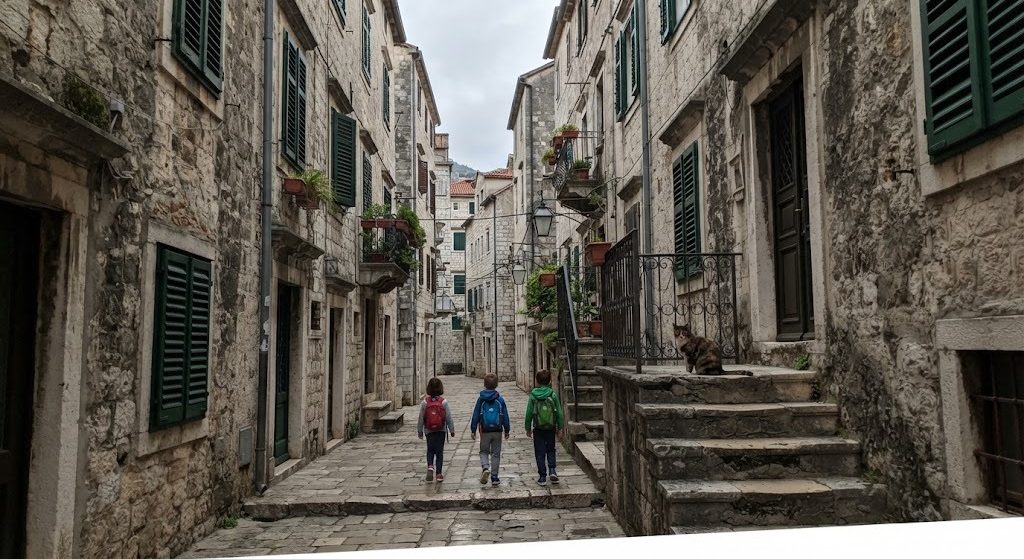
Class runs six and a half hours a day, Monday to Friday. Mornings open with a drop-off window rather than a single cut-off, and pick-up is a fifteen minute slot in the afternoon. Nobody rushes, which matters more than it sounds when you have just moved across time zones and everyone is still waking at four in the morning.
The rhythm inside the day mixes circle time, focused work, hands-on projects, cultural sessions and child-led inquiry. Lessons hang off a cohort theme for the month, so the projects change while the structure stays predictable. Children are grouped in mixed ages, and in a smaller summer cohort the groupings flexed to fit the numbers, which meant more individual attention.
What to pack in the bag
For children under four, the list is short: indoor shoes, diapers and cream if needed, sunscreen applied before drop-off. The centre supplies cots and cribs, bibs, a changing table, potty seats, classroom materials, two snacks and a hot lunch every day, adapted for allergies, plus a bathroom for each classroom.
For children aged four and over: indoor shoes that slip on easily, sunscreen, and a backpack for a one month stay. The centre provides learning materials, both snacks and lunch, water refills, a hat for new families, and the bags for longer cohorts. Weekly field trips are included.
Food, and the allergy question
A centre chef cooks two snacks and lunch daily to a nutritionist's plan, with allergies handled as a standing instruction rather than a special request. Our two children eat restricted diets and came home full every single day, which had never happened to us before. Menus are published weekly so you can see what is coming and flag anything in advance.
Field trips and safety
Trips run weekly and are planned with visibility first: high-visibility vests, groups on foot or by bus depending on age and distance, and teachers supervising closely. Logistics arrive through the class channel, and parents can join when there is transport space. The trips tie into the month's theme, which is why a cathedral visit and a clay workshop end up in the same week.
How parents stay informed
Each class has its own private channel with only that class's parents and teachers in it. Teachers post trip details, daily updates, answers and a weekly photo newsletter. Photographs are never shared publicly, so families who prefer no photos can say so and it is respected. Questions about allergies or events get a reply quickly, which is the standard I now judge other programmes by.
Language and culture
Classes run in English, but the month is layered with local content: Cyrillic letterforms, folklore, and trips into the old town. Children with different first languages are in the same rooms, and the mix seems to help rather than hinder. Learning a few words of the local language became a family project rather than a school requirement.
After school clubs
Optional clubs run after class: chess, water polo, a fitness session for the younger ones, and seasonal options such as archery or building a terrarium. Places depend on a minimum number registering, so sign up in the first week rather than the third. Clubs are the easiest way for children to make friends outside their own classroom.
What we would change
Send the bag with a spare set of clothes in it every day, apply sunscreen at home rather than at the gate, and put the pick-up window in the calendar app with a twenty minute buffer. Beyond that, the only real adjustment was internal: accepting that the day is long for the children too, and that a quiet afternoon is normal for the first fortnight.
The clearest signal came from our youngest, who dressed for class on a Saturday morning before anyone told him it was a day off. That is a better review than anything I could write here.
What the classroom looks like
Rooms are bright, low on clutter and arranged in stations rather than rows: a table for materials, a corner for reading, an area for messy work near the sink. Work is displayed at child height, which sounds like a detail until you watch a four year old walk a visitor over to their own piece on the wall.
Teachers blend a Reggio approach with Montessori materials and elements of the Finnish model, so the day is hands-on rather than worksheet-driven. Projects are built around the month's theme, and every child contributes to something that ends up on display. Our daughter's first piece was a clay work inspired by a painter she had met that week in a story.
Questions worth asking before you commit
- What is the ratio in the current cohort, and how does it change when numbers grow?
- How are allergies recorded, and who holds the medication?
- What happens if a child needs a quiet day away from the group?
- Which field trips need consent in advance, and which are optional?
- Is there a settling-in plan for the first week, and who signs it off?
Ask them by message before you book. Answers that come back quickly and specifically tell you how the place will run when something goes wrong at 9am on a Tuesday.
The practical side of drop-off
Arrive inside the window rather than at its edge, because the handover is a conversation, not a gate scan. Shoes change at the door. Sunscreen goes on before you leave the apartment. Water bottles are kept at school for new families, so you do not need to send one every morning.
Pick-up is a fifteen minute slot, and late collection is handled calmly rather than with a phone call. Still, set a reminder, because the walk home is short enough that it is easy to lose track of time in a café.
What the week costs you
The programme price covers tuition, lunch, snacks, materials and the weekly trip. Outside that, the genuine extras are the bag, indoor shoes, sunscreen and whatever the child brings home from the shop near the square. It is a cheaper month than a term of activities at home, which is part of why families extend.
Would we do it again
Yes, with a larger pack of spare clothes and a stricter bedtime in the first week. The centre was the anchor that made the rest of the month work: the children had somewhere to be, the adults had working hours, and the afternoons came back with stories instead of exhaustion.
If you are weighing a longer stay against a short holiday, this is the piece that decides it.